Thirty-five years of airline flying gave me a lasting affection for rooms with machines on the walls. Crew rooms papered with route maps, maintenance hangars hung with cutaway posters, flight schools with a squadron of aircraft profiles marching down a hallway — those spaces always felt honest to me.
So when I retired and Jill granted me full command of our basement, I knew exactly what it needed: not a pile of mass-produced tin signs, but a wall of machines worth staring at. If you're planning a man cave, a basement bar, or a garage lounge, here are the man cave wall art ideas that worked for us — organized the way I think about them: by hangar, roundhouse, and garage.
The Hangar Wall: Warbirds, Jets, and Cutaway Drawings
Start with the wall you see first when you walk in — I call it the hangar wall. Aviation art earns the anchor position because aircraft read beautifully at a distance: long wings, strong silhouettes, and paint schemes designed to be recognized from a mile away.
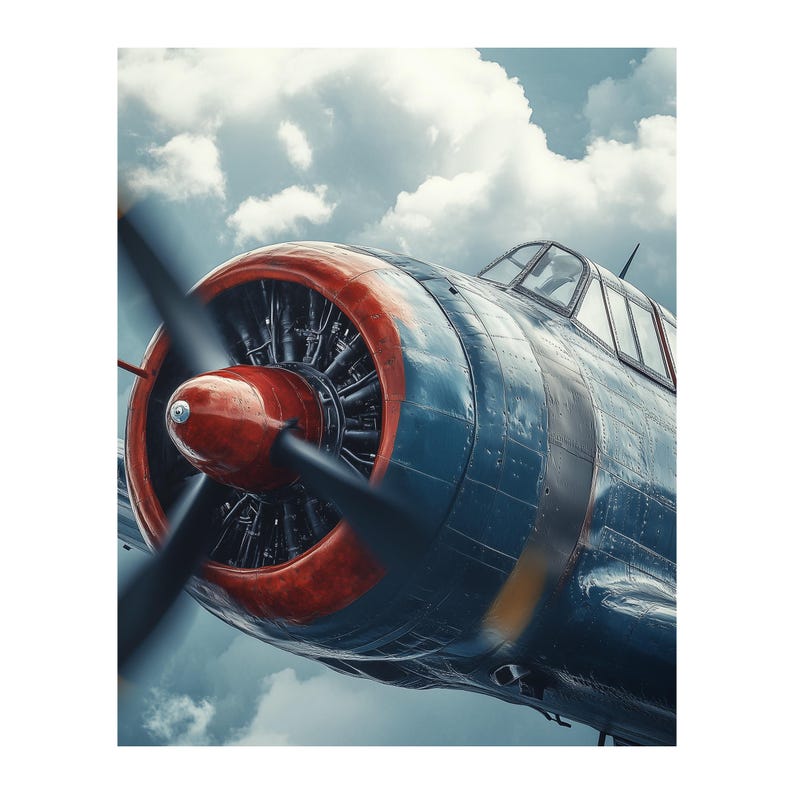
Warbird watercolors are my favorite way to keep the room from feeling like a catalog. A World War II fighter rendered in loose washes has a warmth that a glossy photo poster never will, and it hangs comfortably next to leather and wood.
Our own warbird watercolor series exists because I wanted exactly that on my wall — paintings of the airplanes, not just pictures of them.
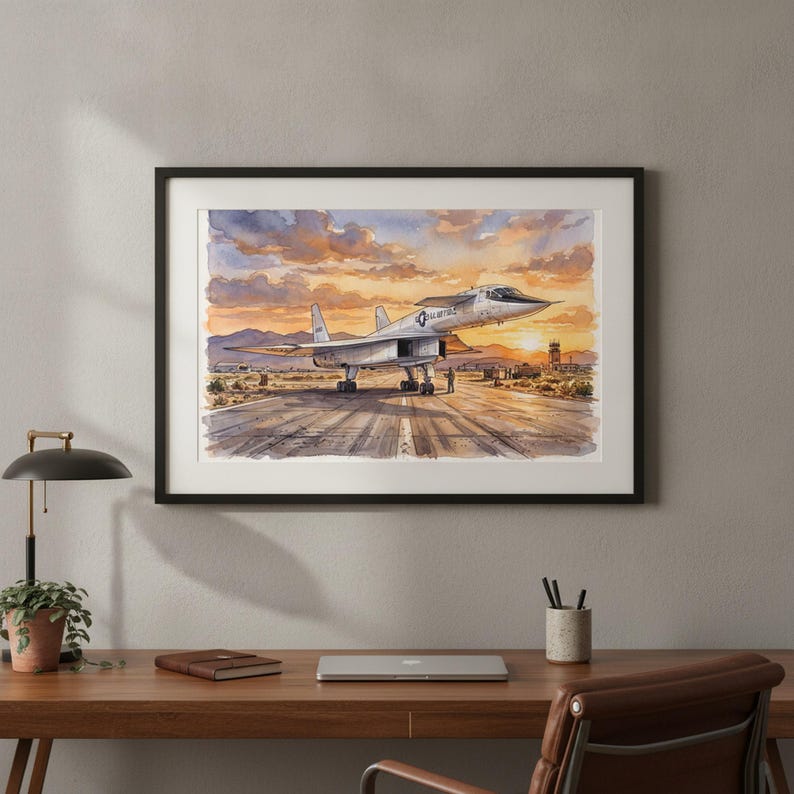
For something rarer, consider the XB-70 Valkyrie. North American Aviation completed only two of these six-engined giants, and they flew at Mach 3 — better than 2,000 miles per hour — with a shape that still looks borrowed from the future.
One was lost in a 1966 midair collision; the survivor is preserved at the National Museum of the U.S. Air Force near Dayton, Ohio. Hang a Valkyrie print and I promise it becomes the most-asked-about object in the room.
The third approach is the chart. A fighter aircraft history chart lines up decades of jets in tidy rows, and a structural cutaway shows an airplane's bones — spars, frames, and systems laid bare.
Charts reward the guest who walks up close, which is exactly what you want art in a social room to do — both the Valkyrie and the fighter chart shown here came off my own hangar wall. And if you're decorating for the pilot in your life rather than as one, our pilot gift guide covers which prints land best.
The Roundhouse Wall: Locomotive Portraits and Railroad Charts
Railroad art brings something aviation can't: mass. A steam locomotive is architecture that moves, and on a dark wall a big locomotive portrait carries the gravity of a monument.
If your taste runs to the giants of the steam era — the machines we profiled in our guide to legendary steam locomotives — a single dramatic three-quarter portrait is the move.
My personal weakness is the steam locomotive cutaway. Strip away the boiler jacketing on paper and you see the firebox, the flues, the running gear — a whole industrial ecosystem in one drawing.
Cutaways were how builders and railroads explained these machines to the public a century ago, and they still do that job handsomely over a workbench or behind a bar. Pair one cutaway with two smaller portraits and the roundhouse wall reads as a set instead of a scatter.
A machine on the wall should do what the machine itself did: stop people mid-stride.
The Garage Wall: 1969–70 Muscle and V8 Blueprints
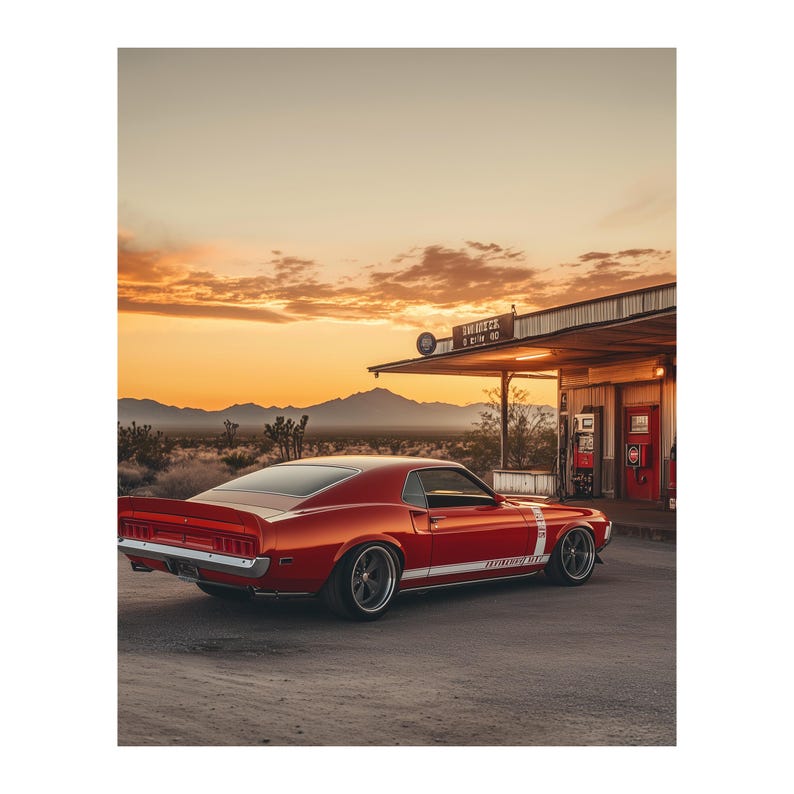
If the hangar wall is about grace and the roundhouse wall is about mass, the garage wall is about attitude. For muscle car art, the calendar practically sets itself: 1969 and 1970 sat at the summit of the era.
Chevrolet's 1970 Chevelle SS 454 with the LS6 engine was factory-rated at 450 horsepower — a one-year-only package that marked the high-water line before the muscle era wound down. The '69 Camaro, the Charger, the big-engined Mustangs — these shapes are so embedded in American memory that even non-car people recognize them on a wall.
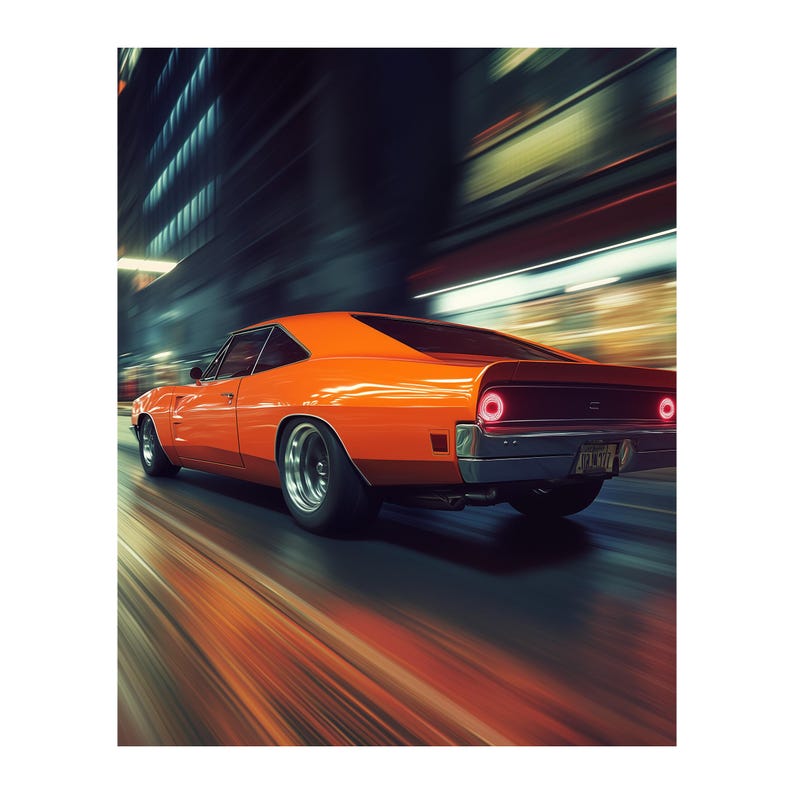
Three treatments work especially well in a basement or garage lounge. A drag launch scene — nose up, smoke rolling off the rear tires, like the launch print above — brings motion into a still room.
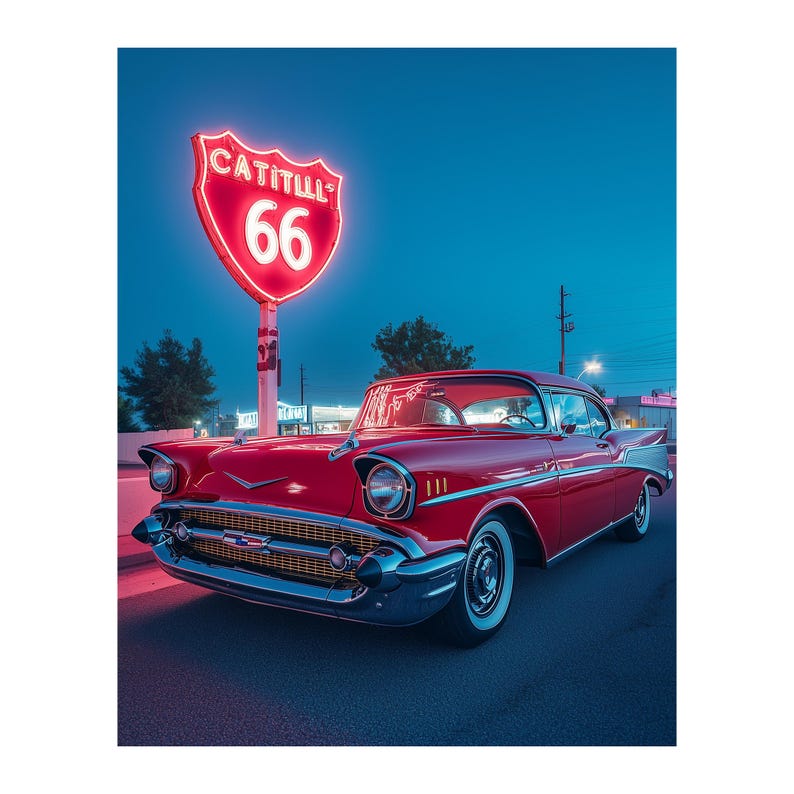
A neon motel night scene parks a classic under buzzing signage and gives a bar corner a moody, cinematic glow. And a V8 engine cutaway blueprint — intake, valvetrain, crank, all in crisp drafting lines — is the thinking man's centerpiece; it flatters anyone who has ever turned a wrench.
We drew all three for the shop because, more or less, they are the three walls of my own garage.
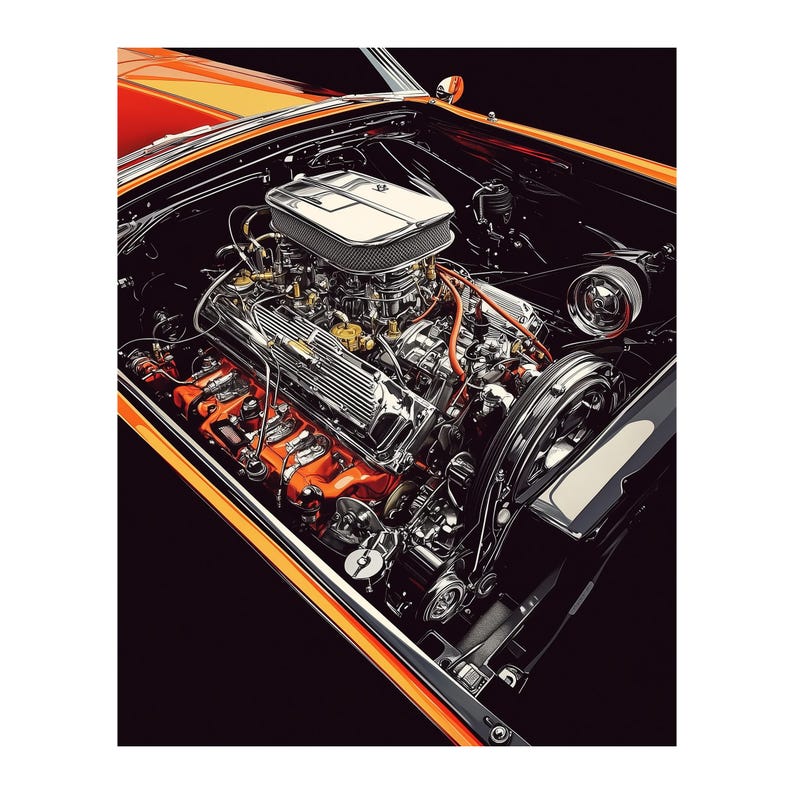
Our studio's muscle car collection covers the 1969–70 classics — drag launch scenes, a neon motel night piece, and the V8 engine cutaway blueprint pictured here — alongside warbird watercolors, XB-70 Valkyrie art, and fighter aircraft history charts.
Browse the collection on EtsyOne Big Statement or a Chart Grid?
With your themes chosen, the next decision is layout — and there are really only two schools.
The statement print
One oversized piece above the main furniture — sofa, workbench, or bar. Aim for art (frame included) roughly two-thirds the width of whatever sits beneath it; much smaller and the print looks like it's floating.
Statement pieces suit dramatic subjects: a locomotive head-on, a Valkyrie planform, a Chevelle caught mid-launch.
The chart grid
The alternative is a grid of matched pieces — four or six chart-style prints in identical frames with identical mats, hung with tight, even spacing of two to three inches. Grids suit the collector instinct: an aircraft history chart flanked by cutaways, or a row of locomotive portraits in formation. The discipline of matched frames is what makes even a modest set look custom.
Whichever school you choose, consider a dark wall. Navy, charcoal, or deep green makes cream-and-brass artwork glow the way instruments glow in a dark cockpit, and it forgives the scuffs a working room collects. Most of our prints are drawn light-on-navy for exactly this reason.
Hang one machine and it's a picture. Hang five in matched frames and it's a collection.
Framing and Lighting for Garages and Basements
A word of caution from a man who has ruined a print or two: garages and basements are hard on paper. Temperature swings and humidity will ripple an unprotected print in a single season.
Frame anything you care about behind glazing, and in a garage choose acrylic over glass — it's lighter, it won't shatter when a broom handle falls against it, and UV-filtering versions help protect inks from fading.
Keep frames simple and consistent: matte black or walnut, with a wide white or off-white mat. The mat does more work than people give it credit for — it gives a blueprint-style print the archival, drafting-room presentation it deserves.
For lighting, warm LEDs in the 2700–3000K range flatter cream paper and brass tones, while cooler "shop light" temperatures flatten everything. A picture light or a pair of aimed spots turns a print wall into a display, and LEDs run cool enough to sit close to the frame.
Since our pieces are digital downloads you print yourself, sizing to your exact wall is easy — our walkthrough on how to print digital downloads covers paper choices and where to have the big sizes printed.
Bringing It Home
A good man cave wall doesn't happen in one weekend, and it shouldn't. Start with one anchor piece on the wall you see first — the airplane, the locomotive, or the car that means something to you — and let the room grow a frame at a time.
The best rooms I've ever stood in, from crew lounges to a friend's hangar apartment, were curated slowly by someone who genuinely loved the machines. Yours will be too.
Everything in this guide — the warbird watercolors, the XB-70 Valkyrie, the fighter history charts, the steam locomotive cutaways, and the 1969–70 muscle car series — is an original Runway & Heirloom design, ready to print at man-cave scale.
Browse man cave wall artJill and I would love to see what your wall becomes. Fly it, drive it, or just hang it — but hang it well.